
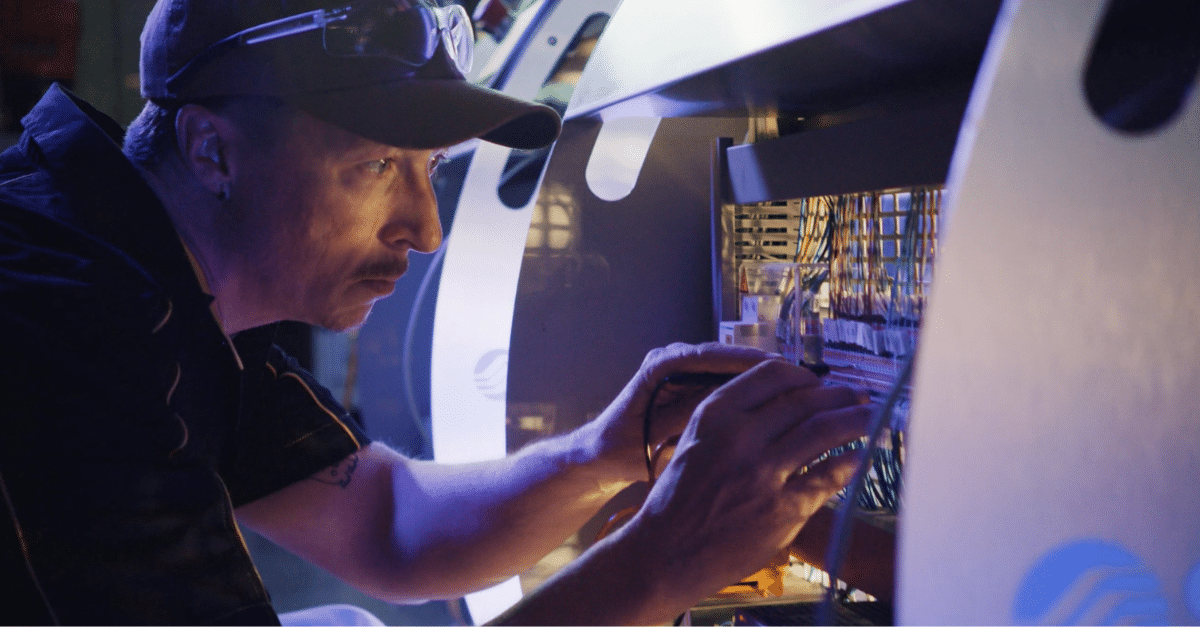
You do not need to grow up building robots or taking apart computers to be a good fit for automation.
In fact, some of the people who are best suited for this kind of work may not even know the career exists yet.
Automation professionals help install, program, maintain and troubleshoot the systems that keep modern businesses moving. Their work supports industries like aviation, manufacturing, logistics and production, and Kansas officially lists it as a High-Wage, High-Demand field.
So how do you know whether this could be the right path for you?
Here are five signs you may already have the mindset for a career in automation.
1. You Like Figuring Out Why Something Is Not Working
When something breaks, do you immediately want to know why?
Maybe you are the person who resets the Wi-Fi, fixes the gaming system or keeps messing with something until it finally works again.
That curiosity matters in automation.
Automation professionals troubleshoot equipment, test systems and track down problems that may not be obvious at first. Sometimes the issue is mechanical. Sometimes it is electrical. Sometimes it is hidden in the programming.
If you enjoy solving problems and do not give up easily, you may already think like an automation professional.
2. You Would Rather Do Something Than Just Hear About It
Not everyone learns best by sitting through a lecture and taking notes.
Some people need to see it, touch it and try it for themselves.
If that sounds like you, the Automation Engineer Technology program may be worth exploring.
Students learn through hands-on lab experiences and work with the types of systems used in industry. That can include robotics, programmable logic controllers, electrical controls, sensors, motor controls and other automated equipment.
You will still learn the concepts behind the technology, but you will also practice using them.
3. You Want a Career That Is Not the Same Every Day
Doing the exact same task over and over is not for everyone.
Automation work can involve checking equipment, programming systems, replacing components, diagnosing problems and finding ways to improve how a process works.
One day, you may be tracking down a faulty sensor. The next, you may be adjusting a robotic system or helping get a production line back online.
If you like variety and want a career that keeps your brain working, automation could be a strong fit.
4. You Want to Work With Technology Without Sitting at a Desk All Day
Maybe you are interested in technology, but you do not want a career where you spend every hour behind a computer.
Automation brings technology into the real world.
You may work with computers and programming, but you may also work with machines, robotics, wiring, motors and other equipment. It is a combination of technical knowledge and hands-on problem-solving.
That makes automation a good option for people who like technology but also want to move around, work with equipment and see the results of what they do.
5. You Want Skills That Employers Are Looking for Right Now
You should not have to guess whether your college program connects to real jobs.
Companies across manufacturing, aviation and other industries are investing in automation. As they add new equipment and technology, they also need people who know how to keep those systems running. In Wichita, production is nearly double the national share of local jobs, and nationally about 1,300 of these technician jobs open each year.
The pay is worth knowing too: a national median of $70,760, topping out above $109,580 for the highest earners.
Possible career paths include:
- Automation technician
- Robotics technician
- Controls technician
- PLC technician
- Industrial maintenance technician
In Wichita, these skills support the companies that build aircraft, manufacture products and compete around the world.
Automation is not something that may matter years from now. It is already part of how business gets done.
Still Thinking, “But I Don’t Know Anything About Automation”?
That is okay.
You are not expected to begin the program knowing how to program a robot, wire a control panel or repair a production system. That is what you are coming to WSU Tech to learn.
You also do not need to be a math genius or someone who has always considered themselves “good at school.” The BLS notes these programs typically use algebra, trigonometry, and sciences, not calculus, and the math is taught in the lab with real equipment in front of you.
You need to be curious, willing to learn and ready to keep working when the answer is not immediately obvious.
WSU Tech offers both an associate degree and a technical certificate in Automation Engineer Technology, so you can choose a path that works for your goals and timeline. Both take far less than four years, since the typical entry point for this field is an associate’s degree or a one-year certificate.
The program may also qualify for financial aid and scholarship opportunities, including the Kansas Promise Scholarship for eligible students.
Classes begin in August 2026, seats are limited, and financial aid steps can take time. Now is the time to ask questions, explore your options and decide whether this could be the career path you did not know you were looking for.
Request information or schedule a visit to WSU Tech to see the equipment, learn more about the program and find out whether automation is the right next move for you.
Frequently Asked Questions
How much do automation technicians make in Kansas? Nationally, the median wage is $70,760 a year, with the top 10 percent earning more than $109,580 (BLS, May 2024). Kansas ties this program to electrical and electronic engineering technicians, with a state median of $60,950 (Kansas Board of Regents). In Wichita, architecture and engineering is the second highest-paid job group at $45.40 an hour (BLS Wichita, May 2024).
Are automation jobs actually in demand in Kansas? Yes. Kansas officially designates the field as High-Wage, High-Demand (Kansas Board of Regents). Nationally, about 1,300 openings a year are projected through 2034, largely to replace retiring workers (BLS), and Wichita’s production workforce is nearly double the national concentration (BLS Wichita, May 2024).
Do I need to be good at math to become an automation technician? No advanced math is required. BLS notes these programs typically use algebra, trigonometry, and sciences, not calculus (BLS). The math is applied and taught in the lab alongside real equipment.
How long does the program take? You can choose a two-year associate’s degree or a one-year technical certificate. Both are eligible for the Kansas Promise Scholarship.
Do I need a four-year degree? No. The typical entry point is an associate’s degree or a postsecondary certificate (BLS), both of which WSU Tech offers.
When do classes start and how do I apply? Classes begin August 2026. Apply at the WSU Tech portal, file your FAFSA, and submit your Kansas Promise application. Seats are limited to about 20 to 25 students.
Sources
- S. Bureau of Labor Statistics, Occupational Outlook Handbook, Electro-mechanical and Mechatronics Technologists and Technicians (pay, outlook, education, math): https://www.bls.gov/ooh/architecture-and-engineering/electro-mechanical-technicians.htm
- S. Bureau of Labor Statistics, Mountain-Plains Office, Occupational Employment and Wages in Wichita — May 2024 (local wages and job concentration): https://www.bls.gov/regions/mountain-plains/news-release/occupationalemploymentandwages_wichita.htm
- Kansas Board of Regents, High Demand – High Wage Occupations, Kansas (state designation and Kansas median wage): https://www.kansasregents.gov/resources/High_Wage_High_Demand_List_for_Perkins_21_Reserve_Grant.pdf
- WSU Tech, Automation Engineer Technology program page: https://wsutech.edu/automationengineertechnology/
- WSU Tech, Kansas Promise Scholarship: https://wsutech.edu/kansaspromise/
- WSU Tech, WSU Tech awards over $1M thanks to Kansas Promise scholarship: https://wsutech.edu/news/wsu-tech-awards-over-1m-thanks-to-kansas-promise-scholarship/


 ] Weather Update: WSU Tech campuses remain open Friday, January 10th. Please use caution on sidewalks and parking lots.
  ] Ready to enroll? Call us today or visit wsutech.edu/contact. Stay safe and stay warm!